If you want to know how to clean cladding without damaging it, the short answer is: gently. For most exterior wall panels, a soft brush, a mild pH-neutral detergent and a low-pressure rinse will remove everyday dirt safely. The right method still varies by material, and the manufacturer's care guidance for the specific product should always take priority over general advice, including the advice in this guide.
Before you start: guidance, safety and access
Check three things before any cleaning starts.
First, the care guidance. Cladding manufacturers set out approved cleaning methods and products, and using something else can affect surfaces, coatings, sealants and sometimes the warranty. If you do not have the guidance, ask the supplier.
Second, safety. Most cladding is above head height, and cleaning at height needs proper planning. Use a competent contractor with suitable access equipment such as a mobile elevating work platform or scaffold, and never lean ladders against panels in a way that could damage them.
Third, the condition of the wall. Note any cracked units, loose fixings, failed sealant or water staining before cleaning. These need repairing, and cleaning around them can make them worse.
A general method for cleaning exterior wall panels
This general approach suits many materials, but adapt it to the manufacturer's instructions.
- Pick the right day. Choose a mild, overcast day. Hot sun dries detergent onto the surface and leaves streaks; frost can damage wet surfaces.
- Protect the surroundings. Cover plants, close windows and vents, and make sure run-off will not damage paving or drains.
- Dry brush first. Remove cobwebs, loose dirt and debris with a soft brush.
- Pre-wet the wall. Rinse with a low-pressure hose from the top down so that dirt does not soak into a dry surface.
- Wash. Apply a mild, pH-neutral detergent with a soft brush, sponge or microfibre cloth, working in manageable sections.
- Rinse thoroughly. Rinse from the top down with clean, low-pressure water before the detergent dries.
- Inspect. Once dry, check for marks you missed, damaged units or open joints.
Material-by-material advice
Clay, terracotta and Modified Clay Material
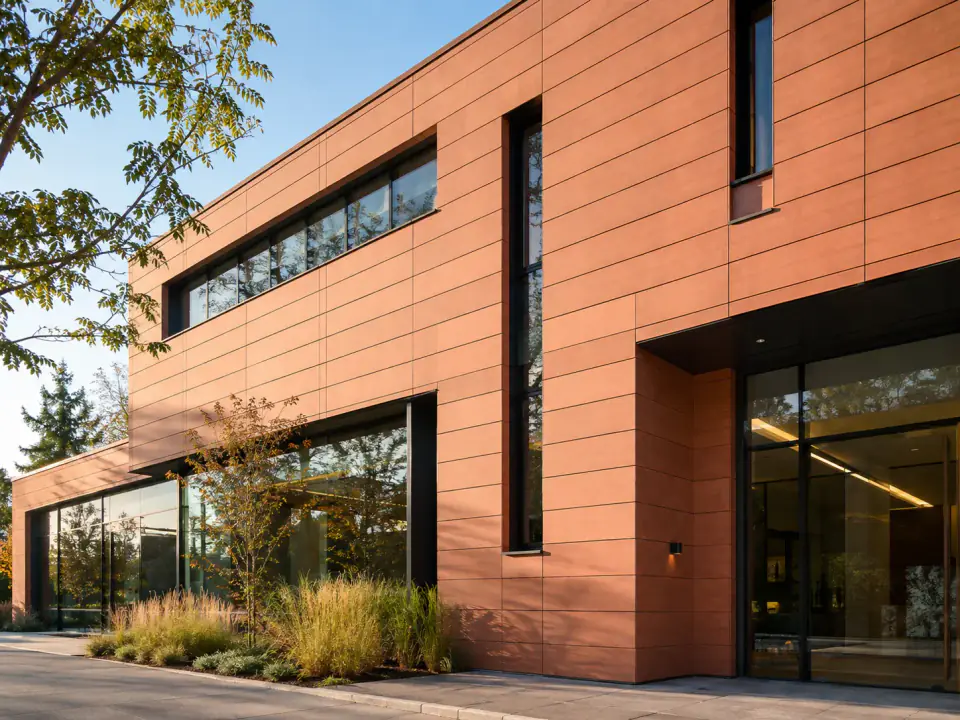
Clay-based finishes such as terracotta claddings are naturally durable and weather resistant, and generally need only occasional washing. Use soft brushes and mild detergents, and rinse well. Avoid wire brushes and abrasive pads, which can scratch or polish the surface, and avoid acidic cleaners unless the manufacturer approves them, as they can affect clay surfaces and joint materials. For thin clay-like tiles and Modified Clay Material finishes, follow the specific product guidance on cleaning agents and methods. Our terracotta cladding guide covers the material in more detail.
WPC and wood-look panels
WPC panels are designed to be low maintenance and do not need sanding or staining like natural timber. Wash them with warm water, a mild detergent and a soft brush, working along the length of the boards and into any grooves. Avoid solvents, bleach and abrasive tools, which can mark the surface. Clear leaves and debris from the bottom of boards and from ventilation gaps so that water can drain away.
Insulated sandwich panels
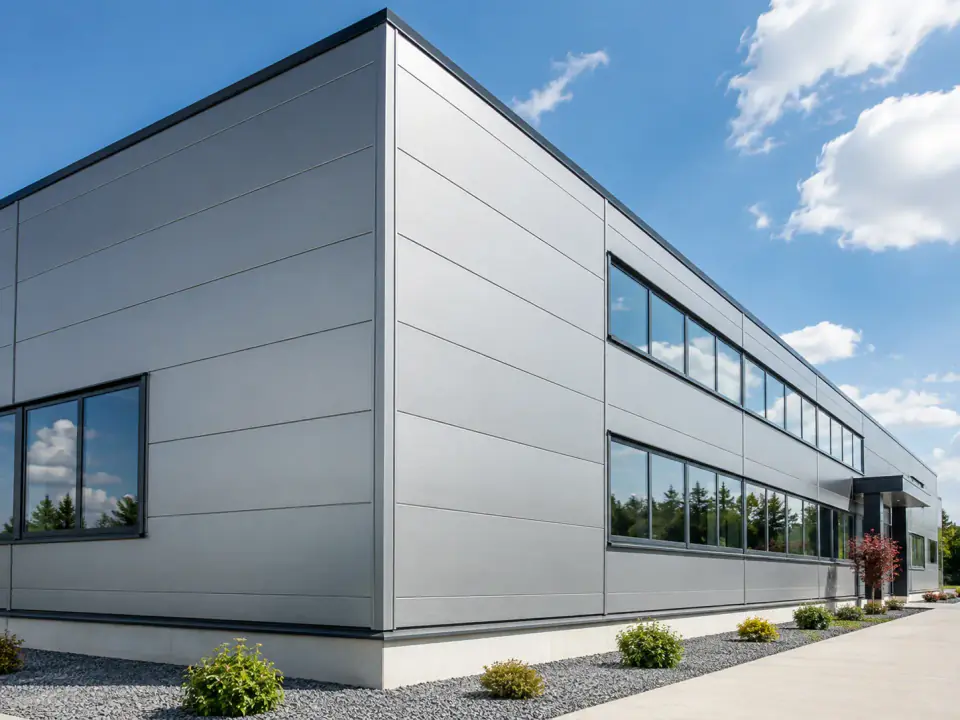
Sandwich wall panels usually have coated metal facings, and the coating is what protects them. Clean with mild detergent and soft brushes or cloths, and rinse thoroughly. Do not use abrasive cleaners, scouring pads or strong solvents, as damage to the coating can expose the metal beneath. Pay attention to cut edges, fixings and the bottom of panels, where dirt and moisture collect, and refer to both the panel and coating manufacturers' maintenance guidance.
Stone cladding
Natural stone varies widely in hardness and porosity. Use clean water and a soft brush first, and only add a stone-specific cleaner if the manufacturer recommends it. Some stones are sensitive to acids, which can etch the surface, so test any product on a hidden area.
Removing algae from cladding
Green algae, moss and lichen grow where walls stay damp: north-facing elevations, shaded areas under trees, and anywhere water runs down the façade from a sill or gutter.
To remove it, brush off loose growth with a soft brush, then apply a cleaner the manufacturer approves for that material, leave it for the stated time and rinse with low-pressure water. Some biocidal products work gradually over days or weeks rather than immediately, so read the label. Always test on a small area first and protect surrounding planting.
Prevention is more effective than repeated cleaning. Cut back overhanging trees and shrubs, clear and repair gutters and downpipes, fix leaking overflows and make sure drips and sills throw water clear of the wall.
Why pressure washers and harsh chemicals cause problems
Pressure washers are tempting because they are fast, but they are one of the most common causes of cladding damage. High-pressure water can force its way behind panels and into joints and cavities, erode surface textures, lift coatings, damage sealants and blow out joint materials. Unless the manufacturer's guidance specifically permits it, use a hose instead.
Harsh chemicals carry similar risks. Bleach, strong acids, alkaline brick cleaners and solvents can discolour surfaces, attack coatings and sealants, and harm plants and drainage. Never mix cleaning products, and never assume a product suitable for one material is suitable for another.
A simple cladding maintenance routine
Good cladding maintenance is mostly inspection. Use this as a starting point, then adjust it to the manufacturer's guidance and the building's exposure.
| Task | When | What to look for |
|---|---|---|
| Visual inspection from ground level | At least annually, ideally after winter | Staining, algae, damaged units, open joints |
| Gutter and downpipe check | In autumn, after leaf fall | Blockages, overflows, leaks onto the façade |
| Ventilation gaps and drainage | During inspections | Debris, nests, blocked cavity openings |
| Sealants and fixings | During inspections | Cracking, gaps, loose or corroded fixings |
| Cleaning | When inspection shows it is needed | Follow the approved method for each material |
| Planting | As needed | Branches and climbers touching the wall |
Record what you inspect and clean, with photographs. This helps track gradual change and supports any warranty conversation with the supplier.
Get care guidance for your cladding
If you are specifying or maintaining Billi products, ask us for the care and maintenance guidance for the specific finish. We support projects across the UK with product guidance and practical advice. Talk to the team about cleaning and maintenance, or request samples if you are planning a new project.
Frequently asked questions
Can you pressure wash cladding?
It is best avoided unless the manufacturer's care guidance specifically allows it. High pressure can drive water behind panels and into joints, strip coatings, erode surfaces and loosen sealants. A low-pressure rinse with a garden hose, soft brush and mild detergent is usually safer. If the guidance permits pressure washing, follow its limits on pressure, distance and nozzle type.
What is the best way to remove algae from cladding?
Start by brushing off loose growth with a soft brush, then apply a cleaner the manufacturer approves for that material and rinse with low-pressure water. Test any product on a small, hidden area first. Algae returns where walls stay damp and shaded, so cutting back planting and fixing leaks or overflowing gutters helps prevent regrowth.
How often should cladding be cleaned?
It depends on the material, exposure and surroundings. Walls near busy roads, trees, the coast or industrial sites usually need more attention than sheltered ones. A visual inspection at least once a year, ideally after winter, shows when cleaning is needed. Always follow the frequency and method in the manufacturer's maintenance guidance for the specific product.