The best restaurant feature wall ideas do two jobs at once: they give a space its identity, and they stand up to the cleaning, knocks and long hours of hospitality use. A single well-chosen wall, lit properly, can set the mood of a dining room, frame a hotel reception or anchor a bar. This guide covers materials and design approaches for restaurants, hotel lobbies and bars, along with the practical checks on durability, cleaning and fire performance that a fit-out needs.
What a feature wall needs to do in hospitality
In a home, a feature wall mainly has to look good. In hospitality it also has to survive daily cleaning, accidental impact from chairs and trolleys, changes in humidity and temperature, and scrutiny from guests sitting a metre away.
Before choosing a finish, define the wall's role. Is it the backdrop to a banquette, the first thing guests see from the door, a wall behind the bar, or a surface in a corridor or stairwell? Each position brings different priorities for durability, cleaning, acoustics and fire performance, and the answer shapes the material.
Restaurant feature wall ideas by material
Textured clay surfaces
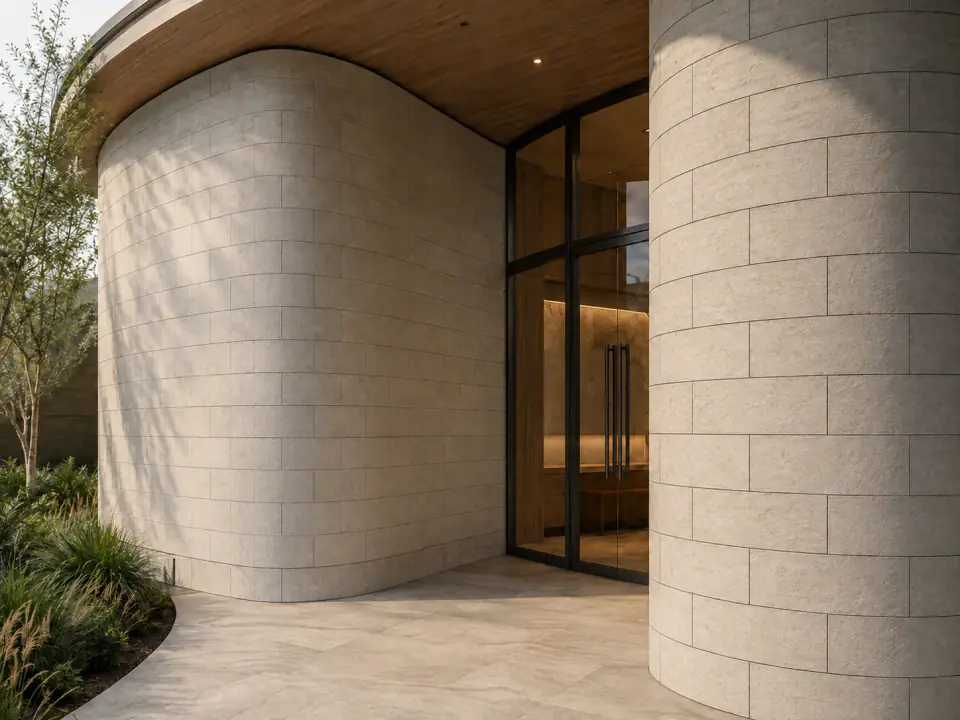
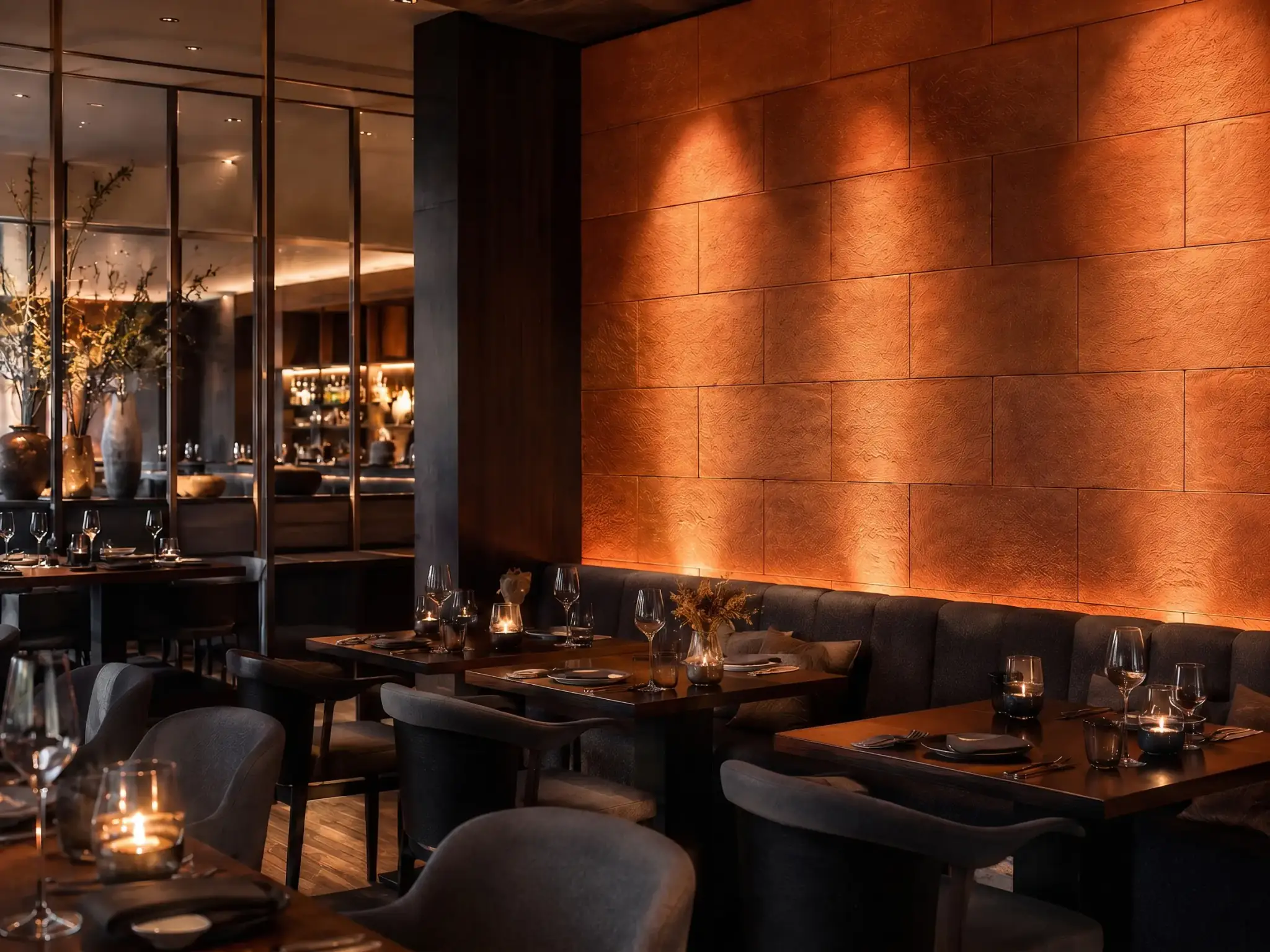
Clay textures bring warmth, craft and a sense of place, and they respond beautifully to low, warm lighting. Billi's flexible tiles give a clay-like surface in thin, lightweight formats that adapt to flat and selected curved surfaces. That makes them useful for curved banquette backs, columns and arched alcoves as well as straight walls.
Ideas to consider:
- A full-height clay wall behind a dining banquette, washed with light from above.
- A curved clay surface wrapping a column or the end of a bar.
- A contrasting clay texture framing the open kitchen pass.
Stone and wood finishes with decorative panels
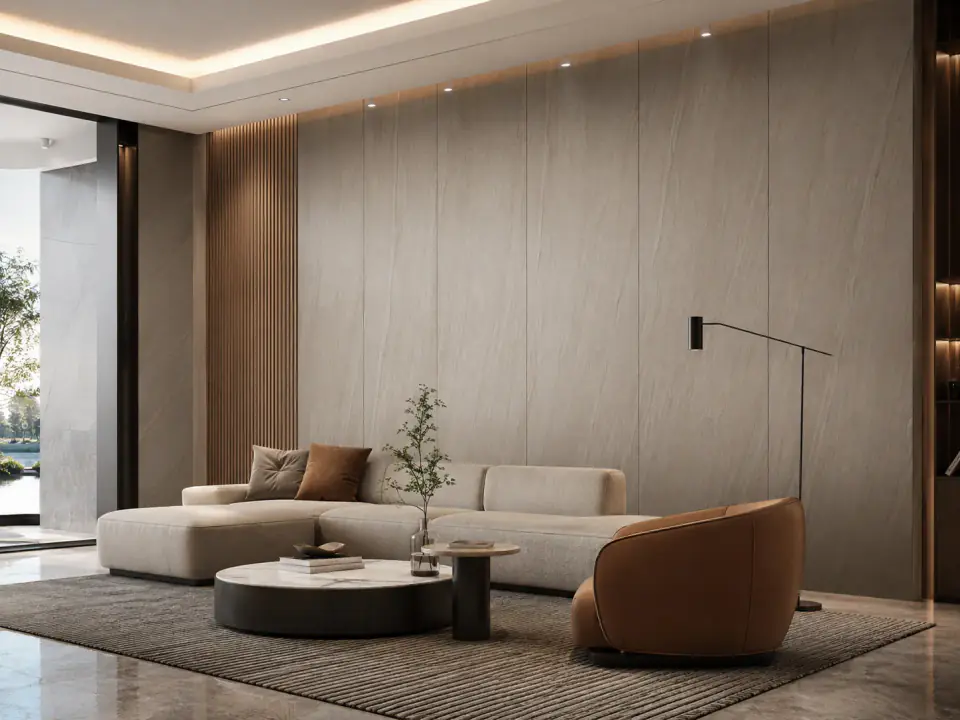
Water-resistant decorative panels with stone or wood finishes are practical for areas near service stations, washrooms and other places where splashes are likely. SPC wall panels are designed for interiors including hotels, restaurants and retail, and are a straightforward way to bring stone or wood character to large wall areas.
Warm timber looks with WPC panels
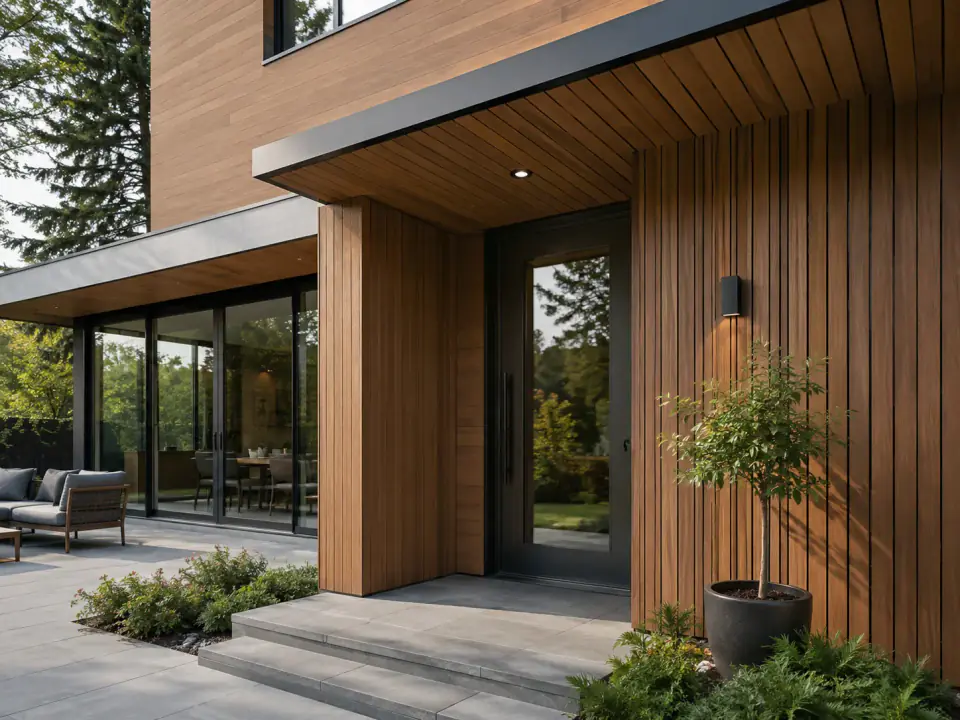
Wood-look boarding and slatted profiles add warmth and rhythm, and can run from wall to ceiling to define a zone. WPC panels are low-maintenance wood-look panels suited to feature walls, ceilings and reception areas. Our comparison of SPC and WPC wall panels explains the differences in more depth.
| Material | Look | Strongest uses | Points to check |
|---|---|---|---|
| Flexible tiles | Clay-like, textured, crafted | Dining walls, curves, columns, bar fronts | Substrate, adhesive system, cleaning near food areas |
| SPC wall panels | Stone or wood finish, water resistant | Service areas, washrooms, large walls | Joint details, impact zones, fire performance |
| WPC panels | Warm wood look, slatted or flat | Reception walls, ceilings, zoning | Cleaning between profiles, fire performance |
Hotel lobby wall cladding
A hotel lobby is a first impression and a working space at the same time. The reception desk backdrop is often the natural feature wall: it is seen on arrival, photographed by guests and lit for long hours.
Hotel lobby wall cladding should be robust where luggage and trolleys pass, and calm enough that signage and wayfinding still read clearly. Stone and clay textures convey quality and permanence, while wood-look panels soften large volumes. In double-height spaces, a single material running the full height usually looks stronger than several finishes stacked on top of each other.
Remember that lobbies often form part of escape routes. That can affect the fire performance required of wall linings, so confirm this early with the design team.
Bar feature wall ideas
Bars are where hospitality design tends to be boldest. A bar feature wall is usually seen behind the back bar, so it has to work with shelving, bottles, mirrors and lighting.
- Dark, textured backdrops make lit shelving and glassware stand out.
- Clay or stone textures bring warmth to a cocktail bar or a hotel bar.
- Wood-look slats give rhythm and can conceal access panels or speakers.
- Curved surfaces at the bar front or end soften the space and guide movement.
Back bar walls see spills and humidity, so check the finish's water resistance and cleaning guidance, and keep sockets, refrigeration vents and access panels in mind when setting out the wall.
Lighting the wall
Texture only shows when light crosses it. Grazing light from close to the wall surface exaggerates relief and creates drama, while a broad wash from further away gives an even, softer effect. Uplighting from the floor, as often used on clay and stone walls, emphasises height.
Agree the lighting with the finish at design stage. Grazing light also exposes uneven substrates, so the background needs to be flat and well prepared. Test samples under the intended lamps and colour temperature, because warm light shifts clay and timber tones noticeably.
Durability, cleaning and fire requirements
Durability and cleaning in high-traffic areas
Hospitality interiors are cleaned often and used hard. Plan for this from the outset:
- Identify contact zones where chairs, tables, trolleys and luggage meet the wall, and consider protection such as a dado, rail or plinth detail.
- Choose finishes whose texture can be cleaned with the methods the operator will actually use.
- Follow the manufacturer's care guidance, and avoid abrasive pads, strong solvents and harsh chemicals unless the guidance allows them.
- Hand over cleaning instructions and spare material for repairs to the operator.
Fire requirements for interior linings
Interior wall and ceiling linings must meet fire performance requirements that depend on the type of building and the use of each space, with escape routes and circulation areas generally treated more strictly than individual rooms. These requirements should be confirmed with the fit-out team, fire engineer or building control body for the specific project.
For every product, check the manufacturer's own classification report or data sheet against the intended use and substrate. Do not assume that a finish suitable for one location is suitable everywhere in the building.
Planning a hospitality feature wall: checklist
- Define the wall's role, position and viewing distance.
- Confirm the fire performance required for the location.
- Check substrate flatness and condition.
- Agree the lighting design with the finish.
- Identify impact and splash zones.
- Confirm cleaning methods with the operator.
- Review physical samples under the intended lighting.
Bring your feature wall to life with Billi
Billi supplies Modified Clay Material and decorative wall finishes in a wide choice of colours, textures and finishes for commercial and hospitality interiors across the UK. Request samples to test under your lighting scheme, or talk to the team about the space you are designing.
Frequently asked questions
What is the best material for a restaurant feature wall?
The best choice balances appearance with cleaning and durability. Textured clay-like tiles suit a warm, crafted look, water-resistant decorative panels suit areas near service or splashes, and wood-look panels add warmth to walls and ceilings. Check each product's care guidance, its suitability for the location and the fire performance required for the space before you specify.
Do restaurant wall panels need to meet fire regulations?
Interior wall and ceiling linings are subject to fire performance requirements that depend on the type of building and the use of each space, such as escape routes. Confirm the requirement with your fit-out team, fire engineer or building control body, and check each product's own classification report for the intended use before installation.
How do you keep a hospitality feature wall clean?
Follow the manufacturer's care guidance for the specific product. Most decorative wall finishes are cleaned with a soft cloth or brush and a mild, pH-neutral cleaner, avoiding abrasive pads and harsh chemicals. Plan protection where chairs, trolleys and luggage can strike the wall, and choose finishes that can be cleaned easily near food service areas.