The short answer to SPC vs WPC panels is that they are two different composites built for different jobs. SPC (stone plastic composite) is a dense, rigid, mineral-filled board that suits interior walls needing water resistance and a crisp stone or wood finish. WPC (wood plastic composite) blends wood fibre and plastic into a lighter panel, often profiled with a wood-look texture, and exterior-rated versions can be used outdoors. This guide explains the difference between SPC and WPC and how to choose.
What SPC panels are
In general terms, an SPC panel has a core made mostly from powdered limestone, or calcium carbonate, bound with PVC and stabilisers and extruded into a dense board. A decorative film printed with stone, marble or wood is laminated to the face and protected by a clear surface layer.
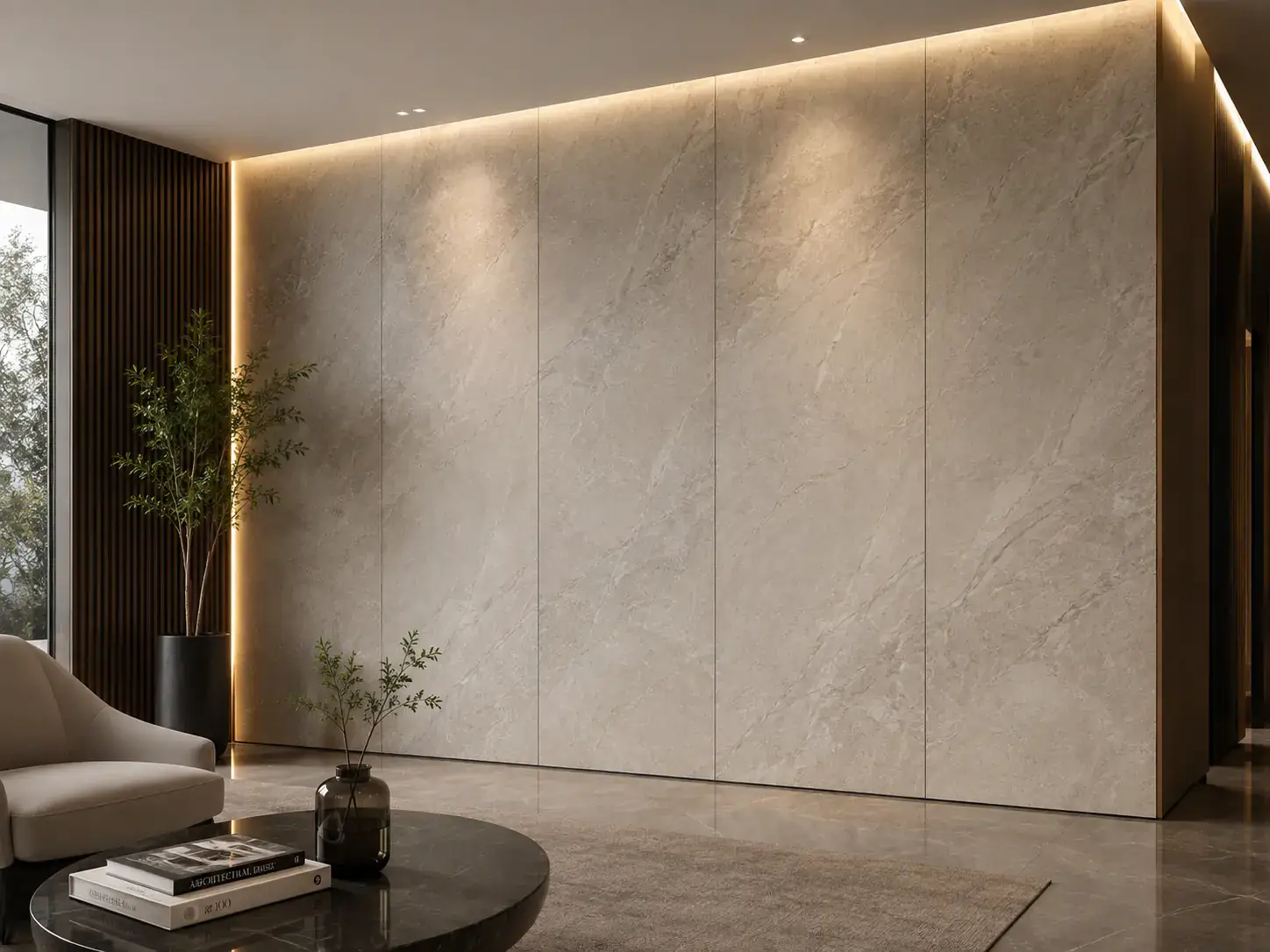
The mineral content makes SPC stiff and stable, and the board does not absorb water. Panels are typically large and flat, with few joints, which suits clean, uninterrupted walls such as the marble-effect feature wall in the image. Our SPC wall panels guide covers the material, installation and care in more depth.
What WPC panels are
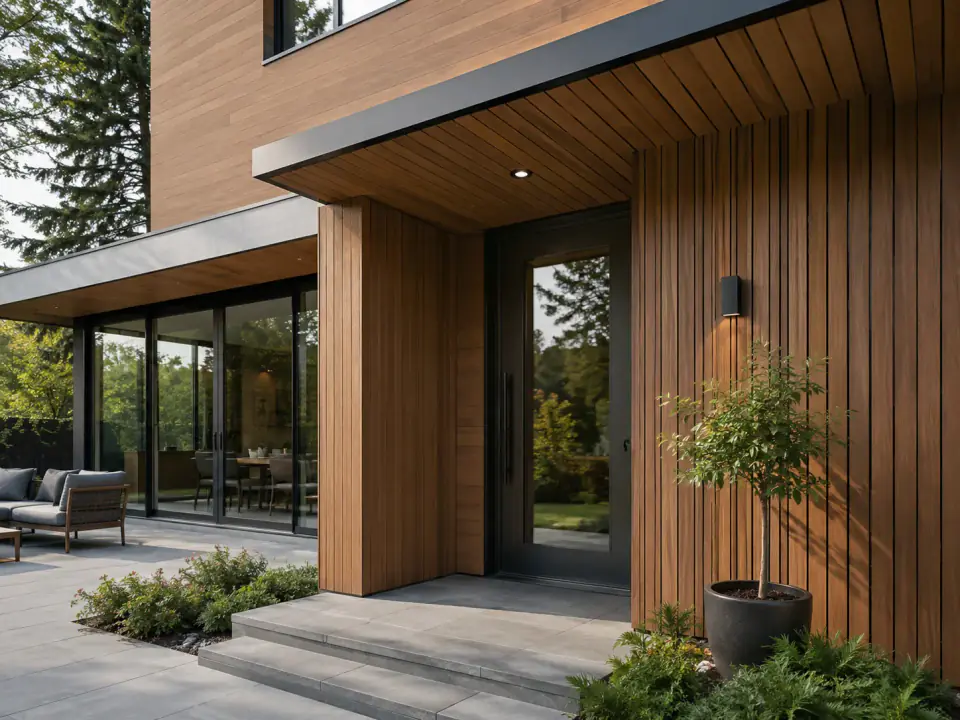
WPC combines wood flour or wood fibre with a thermoplastic such as polyethylene, polypropylene or PVC. The mix is extruded into profiles, which may be solid, hollow or foamed. Many WPC wall panels are fluted or slatted, giving the rhythm of timber cladding without the staining and sealing that real timber needs.
Exterior WPC products are often co-extruded with a protective outer shell that improves resistance to staining, fading and moisture. Formulations vary widely across the market, so the manufacturer's data sheet is the reliable guide to what a specific panel contains and where it can be used.
SPC vs WPC panels compared
| SPC wall panels | WPC panels | |
|---|---|---|
| Core | Mineral powder bound with PVC | Wood fibre blended with plastic |
| Typical look | Printed stone, marble or wood, flat face | Wood-look, often fluted or slatted, textured |
| Rigidity | High, dense and stiff | Lower, lighter profiles |
| Weight | Heavier per panel | Lighter |
| Water | Board resists water; joints need sealing | Generally moisture-tolerant; varies by product |
| Indoor or outdoor | Interior | Indoor, and outdoor where rated |
| Ceilings | Possible with suitable fixings | Commonly used |
| Fixing | Adhesive, clips or battens to a flat wall | Clips, screws and battens, sometimes adhesive |
| Movement | Small, still needs edge gaps | Moves with temperature; gaps essential outside |
| Best for | Bathrooms, kitchens, stone-effect feature walls | Warm feature walls, ceilings, receptions, exteriors |
Where each one works best
Choose SPC when
- The wall is in a bathroom, cloakroom, kitchen or another room with moisture.
- You want a stone or marble effect across a large, flat wall.
- The finish needs to be wipe-clean, with few joints.
- The existing wall is flat, or can be made flat, for bonding.
Billi's SPC wall panels offer stone and wood finishes, including SPC011, GSPC-013 and GSPC-023, for homes, offices, hotels, restaurants and retail.
Choose WPC when
- You want the warmth and rhythm of slatted wood-effect panels.
- The panels will go on a ceiling, a reception wall or a hospitality feature.
- The same finish needs to continue from inside to outside, using exterior-rated panels.
- Low maintenance matters more than the exact look of real timber.
Billi's WPC panels are low-maintenance wood-look panels for indoor and outdoor use, in finishes GSWPC-031, GSWPC-025 and GSWPC-052.
Lighting both
Lighting changes how each panel reads. A linear light or wall washer grazing across WPC flutes creates strong shadow lines. On a polished SPC marble finish, the same light shows reflections and any unevenness in the wall behind, so a flat substrate becomes even more important.
Installation differences
SPC is usually bonded or clipped to a flat, sound substrate. The panel's stiffness bridges minor hairline imperfections but not real unevenness, so preparation matters. Set out the joints so veining or grain flows across the wall, and seal edges and penetrations in wet areas.
WPC is often fixed with clips and screws to timber or aluminium battens, which makes it tolerant of less even walls and allows services to run behind. Outdoors, battens create a ventilated void behind the panels. Because composites containing plastic expand and contract with temperature, leave the expansion gaps the manufacturer specifies at ends, edges and junctions, and fix with the recommended clips so the panels can move.
For either material, acclimatise the panels before cutting if the manufacturer recommends it, and use its cutting and fixing methods.
Common mistakes to avoid:
- Bonding SPC to an uneven wall and expecting the panel to hide the problem.
- Butting WPC tightly against walls, ceilings or other panels with no room to move.
- Using an interior-only panel outdoors, or in a direct shower area it is not approved for.
- Fixing exterior WPC straight to a solid wall without a ventilated batten void.
- Leaving cut edges and penetrations unsealed in kitchens and bathrooms.
Fire, planning and regulations
Both SPC and WPC contain plastic, so fire performance needs checking for every use. Internal wall and ceiling linings have guidance under Approved Document B, which varies by room and building type. It has been under review, so work from the current edition and check the specific product's classification report with building control.
Outside, the rules are stricter. In England, Regulation 7(2) requires materials in the external walls and specified attachments of relevant buildings with a storey over 18 metres to achieve European classification A1 or A2-s1,d0, subject to listed exemptions. For other buildings, confirm the approach with a fire engineer and building control.
Planning also applies to exterior use. Under permitted development, a house can usually be clad if the materials are of similar appearance to the existing house. In Conservation Areas, National Parks, National Landscapes and the Broads, cladding with timber, plastic and several other materials needs planning permission. Our guide to WPC cladding outdoors covers exterior use in more detail.
Care and maintenance
Both panels are low in maintenance. Clean SPC with a soft cloth and mild detergent, and avoid abrasive pads and strong solvents that could dull the surface layer. Renew sealant lines in wet areas if they split.
Clean WPC with a soft brush or cloth and mild soapy water, working along the profile. Outdoors, a periodic wash removes dirt and organic growth. Avoid pressure washing at close range unless the manufacturer permits it.
See both finishes side by side
The simplest way to decide between SPC and WPC is to compare them in the room or on the wall where they will go. Request samples of both ranges, or speak to the team about your space, moisture levels and indoor or outdoor use.
Frequently asked questions
What is the difference between SPC and WPC?
SPC, or stone plastic composite, is a dense, rigid board made mostly from mineral powder bound with PVC, usually with a printed stone or wood face. WPC, or wood plastic composite, blends wood fibre with plastic into a lighter panel, often profiled with a textured wood-look surface. SPC suits interior walls; WPC products can suit indoor and outdoor use.
Which is better for a bathroom, SPC or WPC?
SPC is usually the stronger choice for bathrooms, because its dense, water-resistant board and large flat faces suit wet rooms and wipe clean easily. Some WPC panels also resist moisture well. Whichever you choose, check the manufacturer's approval for wet areas, seal joints and edges as specified and keep the room well ventilated.
Can WPC panels be used outside?
WPC panels made and approved for exterior use can clad garden rooms, fences, soffits and façades. They usually fix to ventilated battens with clips and screws, with expansion gaps for temperature movement. Check planning rules, the product's fire classification report for the building and the manufacturer's installation guidance before specifying them outdoors.