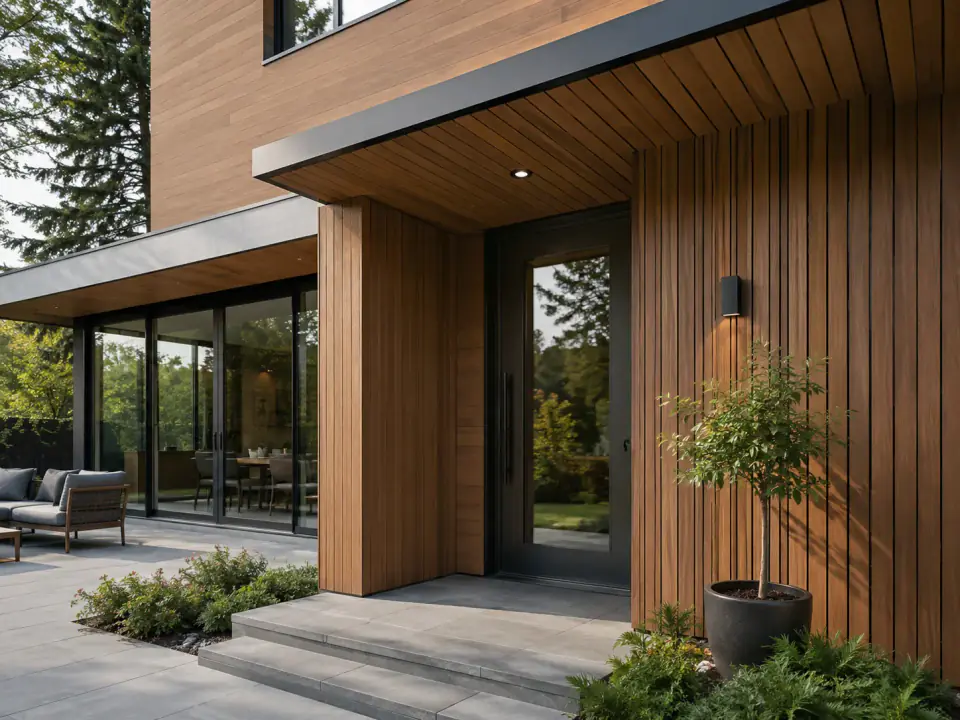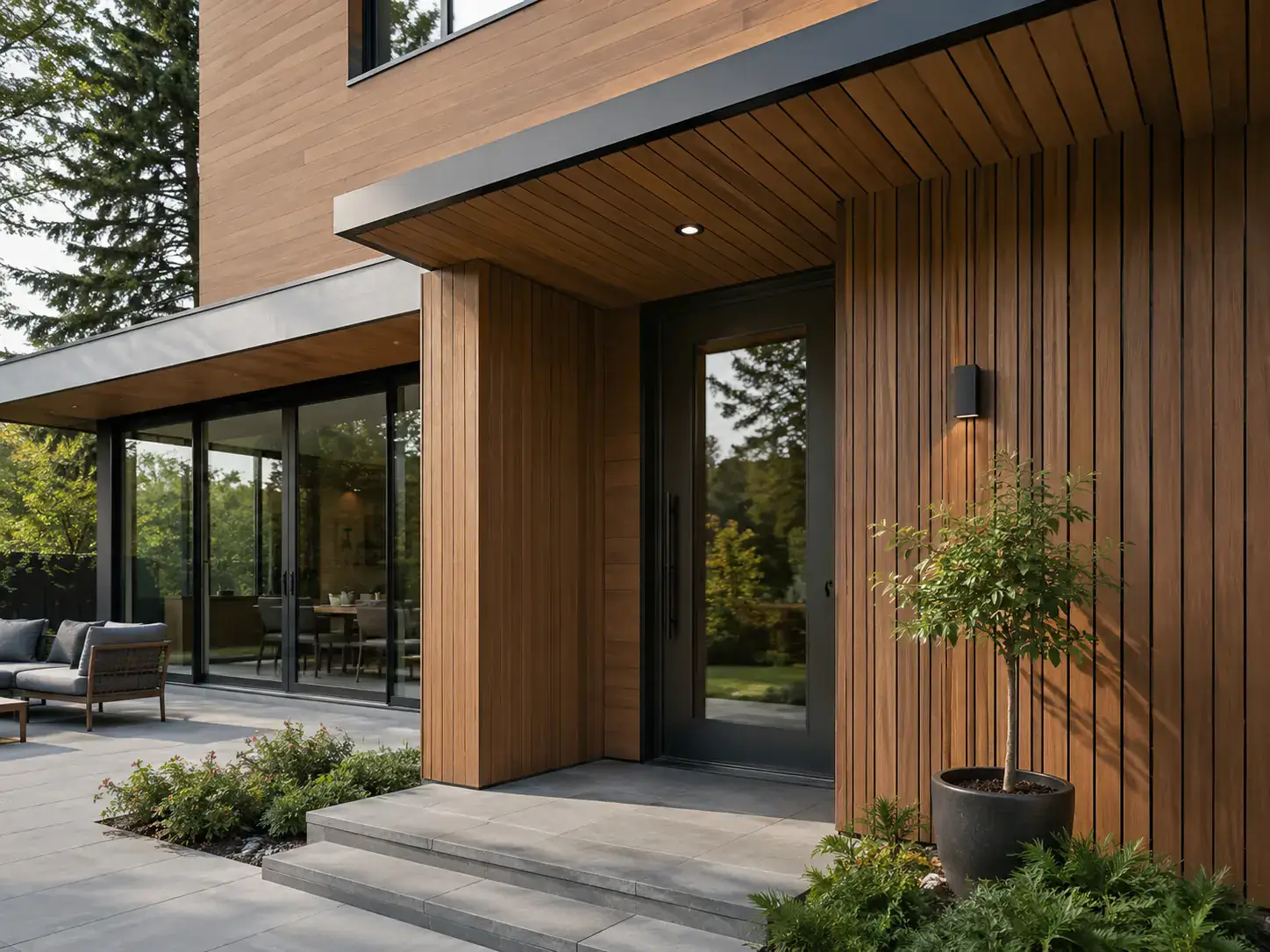
WPC cladding, short for wood-plastic composite cladding, is a popular way to get the warmth of timber on an outside wall without the regular staining and oiling real wood needs. How well it performs over time depends less on the label and more on three things: how the board resists UV light, how the wall behind it is ventilated, and how it is fixed. This guide explains each one, answers the common question of whether composite cladding fades, and sets out what to check before you specify it.
What WPC cladding is and why it is used outdoors
Wood-plastic composite blends wood fibre or wood flour with a thermoplastic binder, plus additives such as pigments, UV stabilisers and processing aids. The mix is extruded into boards, shiplap profiles or slatted battens, either solid or with hollow chambers to reduce weight.
Some products are capped or co-extruded, meaning a tougher polymer shell wraps around the composite core. The shell helps the surface resist moisture, staining and sunlight. Uncapped boards leave wood fibres closer to the surface, which affects how they weather.
The appeal outdoors is straightforward. You get consistent wood effect cladding with no knots, splits or resin bleed, a predictable colour from board to board, and a surface that needs cleaning rather than recoating. Our WPC panels are designed for indoor and outdoor use, which makes them useful when a project carries the same wood-look finish from a porch or entrance into a reception area or ceiling.
Does composite cladding fade?
The honest answer is that every exterior material changes in sunlight to some degree, and composite cladding is no exception. The useful questions are how much it changes, how evenly, and whether the change settles.
Several factors drive the result:
- UV stabilisers and pigments. The quality and quantity of these additives have the biggest influence on colour stability. They vary between manufacturers and product lines.
- Capped or uncapped. Uncapped boards often lighten in their early life as surface wood fibres are exposed to sun and rain, then the colour tends to settle. Capped boards generally hold their colour more steadily.
- Colour choice. Darker colours absorb more heat and can make any change more noticeable. Mid-tones and greys are usually more forgiving.
- Orientation and shelter. South and west elevations get more sun. Boards under deep eaves or a canopy can weather differently from fully exposed ones, which may show as a visible difference across one wall.
The practical step is to put samples outside on the elevation you are cladding and look at them over a few weeks, next to a sample kept indoors. Ask the supplier what weathering guidance they hold for that specific product, and order enough material from one batch to finish the job.
Ventilation: the detail that decides long-term performance
Outdoor WPC cladding should be installed as a rainscreen. The boards form the outer skin, and behind them a framework of battens creates a cavity that lets air move and water drain away. Openings at the base and head of the cavity, protected by insect mesh, keep that airflow going.
When cladding is fixed tight to a wall, or the cavity is blocked, moisture has nowhere to go. That can lead to staining, damp in the wall behind, decay in untreated battens and distortion at cut ends. On timber-frame walls a breather membrane behind the cavity is normally part of the build-up.
Keep these points on your drawings:
- Use treated battens at the spacing the board manufacturer specifies.
- Leave the cavity depth recommended for the product and keep it clear of insulation offcuts and debris.
- Hold the bottom of the cladding clear of the ground to avoid splash-back and standing water.
- Detail window heads, sills and corners so water is directed out of the cavity, not into it.
Fixings, expansion and movement
Composites contain plastic, and plastics expand and contract with temperature more than timber does. Boards can also move slightly with moisture. If they are fixed rigidly, that movement shows up as bowing, buckling or open joints.
Common mistakes and how to avoid them:
| Mistake | What can happen | How to avoid it |
|---|---|---|
| No expansion gaps at board ends | Boards push against each other and bow | Leave the end and abutment gaps in the installation guide |
| Over-tightened screws | Boards cannot move and may crack around fixings | Use the specified clips or screws and do not overdrive them |
| Mild steel fixings | Rust staining and corrosion | Use stainless steel or the fixings the manufacturer supplies |
| Fitting cold boards tight in winter | Gaps close up or boards bow in summer | Let boards acclimatise on site and follow temperature guidance |
| Cut ends left exposed | Moisture uptake and an untidy edge | Use trims or end caps where the system provides them |
Follow the system's own installation guide over general advice. Fixing patterns, spans and gap sizes vary between profiles.
WPC compared with timber and other wood effect cladding
WPC is one of several ways to achieve a wood-look façade. The right choice depends on how much maintenance you will accept, how authentic the grain needs to be and the building's fire requirements.
| Option | Appearance | Maintenance | Things to weigh up |
|---|---|---|---|
| Natural timber (e.g. cedar, larch) | Real grain, varies board to board | Weathers to silver unless regularly treated | Movement, splitting, fixing stains, treatment cycles |
| WPC cladding | Consistent wood effect | Periodic washing | UV colour shift, thermal movement, combustibility |
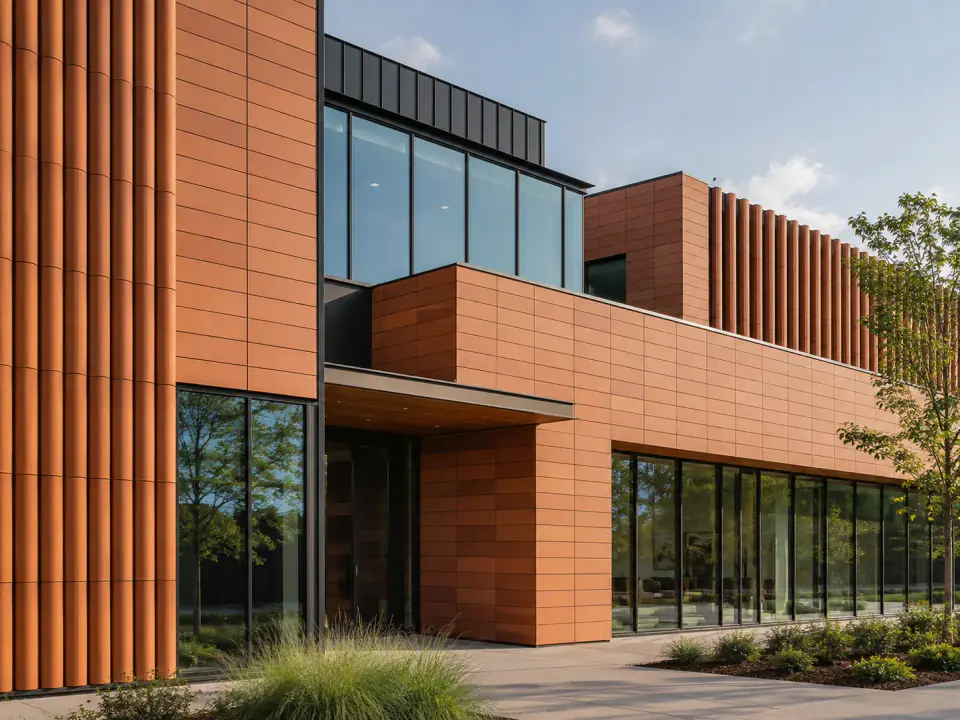
| Clay-based cladding | Warm natural texture, not wood grain | Low maintenance | Different look, different fixing system |
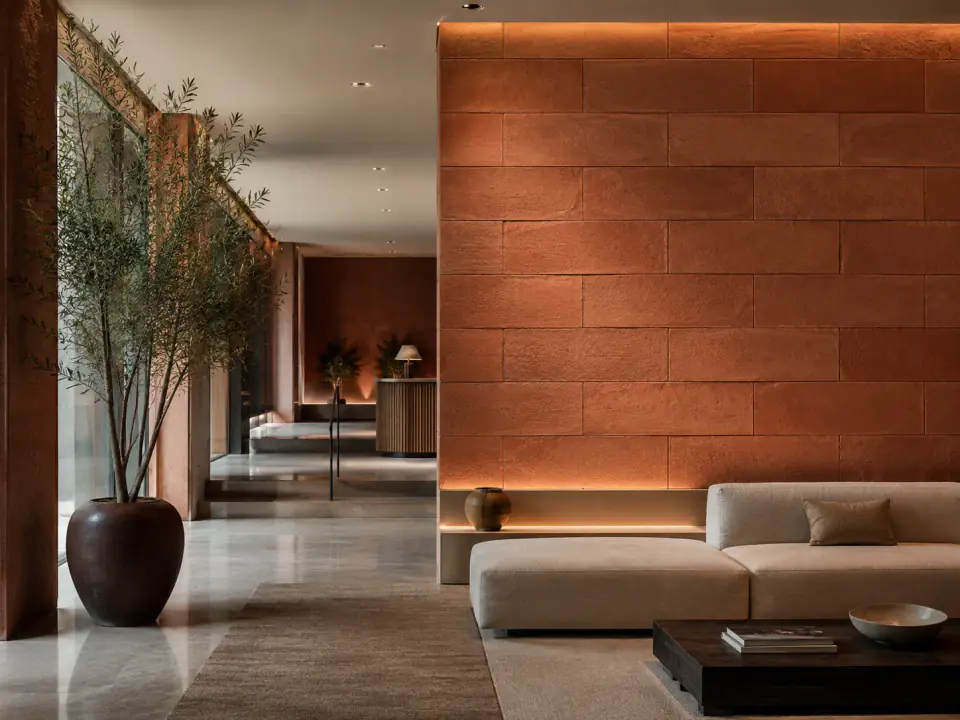
For inside spaces such as bathrooms, kitchens or commercial washrooms, SPC wall panels offer a water-resistant interior alternative with a wood or stone finish. If you want warmth outdoors without a plastic-based board, a clay system such as our terracotta claddings gives a natural, low-maintenance façade with a different character.
Fire, height and planning considerations
Because WPC contains plastic and wood fibre, it is combustible to some degree. In England, Regulation 7(2) of the Building Regulations requires materials in the external walls of relevant buildings with a storey over 18 metres, such as flats, student accommodation and hotels, to achieve European classification A1 or A2-s1,d0, with listed exemptions. Plastic-based composites are generally not suitable for those walls.
Lower buildings still need to follow the guidance in Approved Document B, which can depend on building use, height and distance to the boundary. Confirm the route with your building control body, and read our plain-English guide to cladding fire regulations in the UK before you specify.
Planning matters too. Under permitted development you can usually clad a house in materials of similar appearance to those already used, and in a Conservation Area timber, plastic and similar claddings need planning permission. Our guide to planning permission for cladding in England explains the checks.
Caring for WPC cladding outdoors
Maintenance is light but not zero. A wash with a soft brush, water and a mild detergent once or twice a year removes dirt, pollen and algae before they mark the surface.
Avoid solvent cleaners and abrasive pads, and keep a pressure washer at low pressure and a sensible distance if you use one. While you are at it, check that cavity openings and insect mesh are clear and that trims and fixings are secure.
See WPC finishes before you decide
The best way to judge wood effect cladding is to hold it against your building in daylight. Request samples of our WPC finishes, or talk to the team about the elevation, the substrate and how you plan to detail the cavity.
Frequently asked questions
Does composite cladding fade in the sun?
Most exterior materials change colour in sunlight to some degree, and composite cladding is no exception. How much depends on the UV stabilisers and pigments in the board, whether it has a protective cap layer, the colour you choose and how exposed the elevation is. Ask for samples and the manufacturer's weathering guidance for the specific product before you order.
Is WPC cladding suitable for the UK climate?
WPC cladding can work well in UK conditions when it is installed as a ventilated rainscreen on treated battens, with the expansion gaps and fixings the manufacturer specifies. Rain, wind and changing temperatures are manageable if moisture can drain and dry from the cavity and the boards are free to move without being restrained.
Can WPC cladding be fixed directly to a wall?
It is generally not recommended. Fixing boards straight onto masonry or sheathing traps moisture and stops air moving behind the cladding, which can cause staining, damp on the wall behind and distortion. A batten framework that creates a ventilated cavity, with openings at the top and bottom, is the usual approach for outdoor composite cladding.
Can you paint WPC cladding?
Painting is not usually needed or recommended, because the colour is built into the board and paint can peel from plastic-rich surfaces. If you want a different look later, check the manufacturer's guidance first, as coatings may affect the product's performance or any guarantee. Choosing the right finish at the sample stage avoids the problem.