Stone cladding for interior walls adds texture, depth and a sense of permanence to a room in a way that paint or wallpaper cannot. The main decisions are which type of stone to use, where it will have most impact, how it will be lit and whether the wall can carry it. This guide covers stone feature wall ideas for living rooms, bedrooms and commercial interiors, and the practical steps that make the result look right.
Types of stone cladding for interiors
Interior stone cladding falls into a few broad groups. Each gives a different look and puts different demands on the wall behind.
| Type | Look | Weight and fixing | Best for |
|---|---|---|---|
| Natural stone veneer | Authentic colour variation and texture | Heavier, needs a strong substrate and suitable adhesive | Statement walls where authenticity matters |
| Stacked stone panels | Layered strips with deep shadow lines | Panelised for quicker fixing, still relatively heavy | Chimney breasts, TV walls, rustic schemes |
| Lightweight stone-effect cladding | Stone character in a thinner, lighter format | Lighter adhesive fixing, easier cutting | Upper floors, plasterboard walls, curved areas |
| Stone-finish wall panels | Smooth printed or textured stone look | Large panels, quick to install | Bathrooms, commercial washrooms, busy spaces |
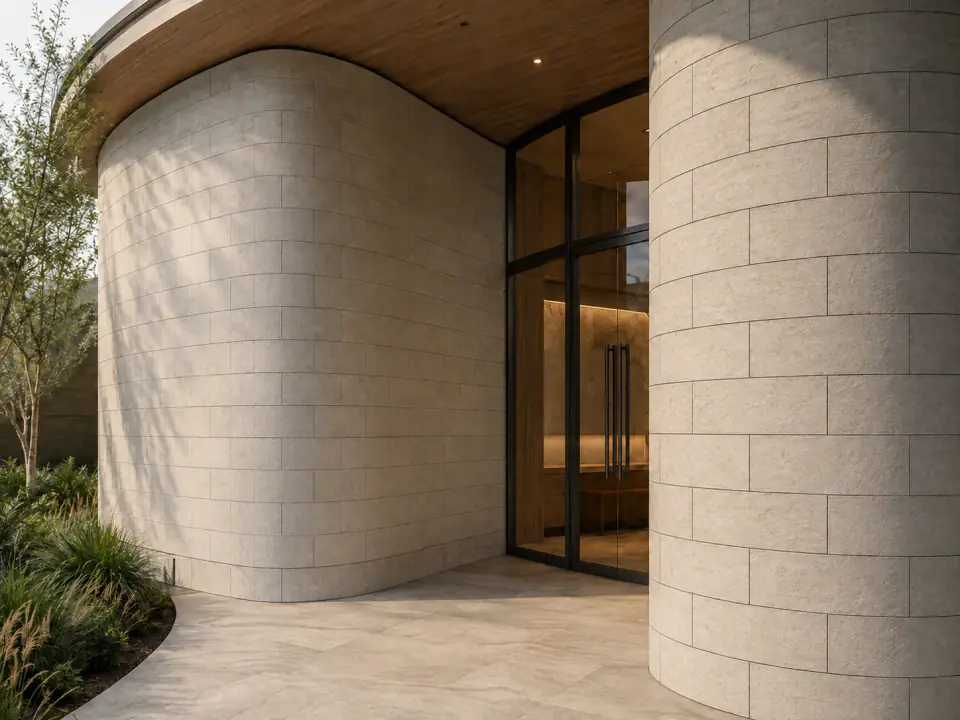
Our stone claddings are natural stone products that add texture and depth to residential, commercial and hospitality interiors. Where weight or curves are a concern, our flexible tiles are thin and lightweight, adapting to flat and selected curved surfaces while keeping a clay-like surface character.
Where a stone feature wall works best
A feature wall should support the room, not compete with it. The best location is usually a wall the eye already goes to.
Living rooms
The chimney breast is the classic choice, and a stacked stone wall around a fireplace or media unit gives the room a clear anchor. A long, uninterrupted wall facing the sofa also works well. Keep the rest of the palette calm so the stone reads as the focal point.
Bedrooms
Stone behind the headboard brings warmth and texture without the visual weight of a full room. Softer, paler stones and finer textures suit bedrooms better than deep, rugged profiles.
Hallways and stairs
A stone wall running up a stair or along an entrance hall gives a strong first impression. Because people brush past these walls, choose a texture that will not snag clothing or collect dust too readily.
Commercial interiors
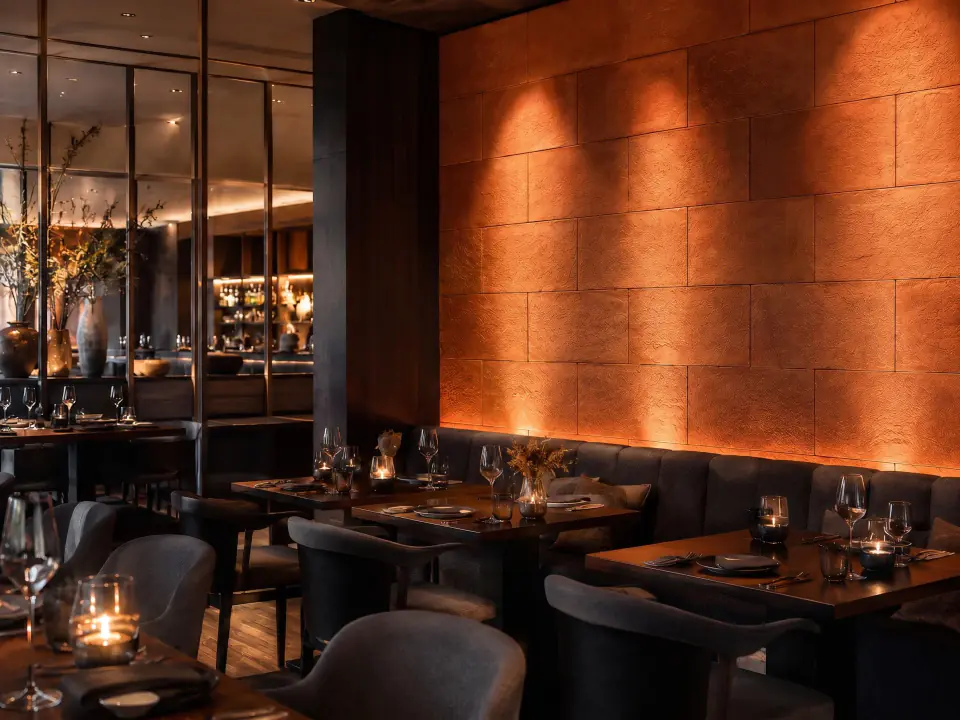
Hotels, restaurants and offices use stone behind reception desks, along bar backs and in lift lobbies. For more ideas, see our article on choosing cladding colour and texture.
Lighting makes or breaks the texture
Stone looks flat under direct, front-on light. It comes alive when light grazes across it from above, below or the side, casting shadows across every ridge and joint.
Plan the lighting before the wall is clad:
- Recessed ceiling downlights set close to the wall wash light down the face.
- LED strips in a floor or shelf channel throw light upwards.
- Warmer colour temperatures flatter most stone; very cool light can make it look grey and cold.
- Fix cable routes, switch positions and any wall-mounted TV brackets first, so cables can be hidden behind the cladding.
It is worth testing a sample under the actual lighting in the room, at night as well as in daylight.
Substrate, weight and fixing
The wall behind the stone matters as much as the stone itself. Cladding needs a flat, sound, clean and dry surface, and the substrate must be able to carry the weight.
Natural stone and stacked panels can be heavy, and plasterboard has limits on what it can hold. On a stud wall, heavier stone may need a cement-based backer board or extra support. Lightweight stone-effect products are much easier to fix to plasterboard, on upper floors and in refurbishment projects where you do not want to rebuild walls.
Always use the adhesive and fixing method the cladding manufacturer specifies. Around fireplaces and stoves, check the stove manufacturer's clearance guidance and the Building Regulations, and confirm the cladding and adhesive are suitable for the heat involved.
Planning your stone feature wall step by step
- Choose the wall. Pick the natural focal point and check what is on it: sockets, switches, radiators, doors.
- Pick the type of stone. Balance look, weight and budget against what the wall can carry.
- Order samples. View them in the room, in daylight and under your planned lighting.
- Plan lighting and services. Move sockets, add cable routes and position lights before cladding.
- Prepare the substrate. Make it flat, sound and clean, and add backer board if needed.
- Set out the wall. Dry-lay a section on the floor to plan colour mix and joint pattern.
- Plan the edges. Decide how corners, ends and the ceiling junction will be finished.
- Install and finish. Fix as the manufacturer specifies, then seal if the product requires it.
Common mistakes to avoid
- Ignoring the edges. Raw edges at the end of a wall look unfinished. Use corner pieces, trims or return the cladding round the corner.
- Too many cut-outs. A wall full of sockets breaks up the stone. Relocate or group outlets where possible.
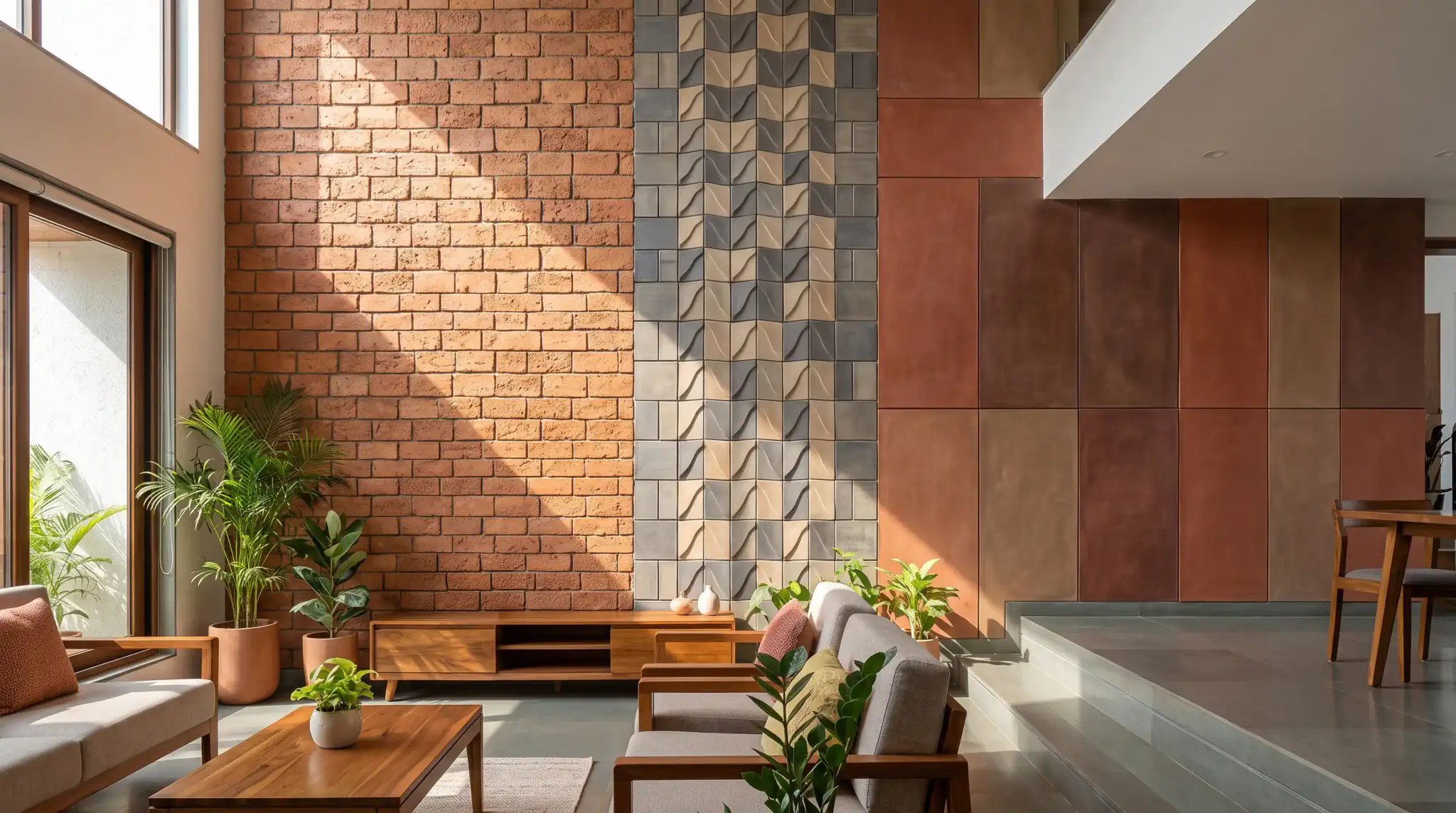
- Mixing too many textures. Stone, patterned tiles and heavy wood grain in one room can feel busy. Let one surface lead.
- Repeating patterns. Take panels or pieces from several boxes and mix them, so colour variations are spread evenly.
- Forgetting cleaning. Deep textures collect dust. In kitchens and busy areas, choose a profile you can clean easily.
Natural stone or stone-effect?
Natural stone gives an authenticity that is hard to match, with genuine variation in every piece. It suits projects where the wall can carry the weight and the design wants that raw, material quality.
Lightweight stone-effect cladding suits projects where weight, speed, curves or substrate are constraints. It is also a good option when the same look needs to run across walls of different construction. To understand how clay-based lightweight products work, read what Modified Clay Material is.
For wet areas, SPC wall panels offer a water-resistant interior panel with a stone finish, a practical choice for bathrooms, hotel washrooms and restaurant toilets.
See the stone before you commit
Texture, colour and scale are hard to judge on screen. Request samples of our stone claddings and flexible tiles to try in your space, or talk to the team about the wall you are planning.
Frequently asked questions
Can you put stone cladding on plasterboard?
Lightweight stone cladding and thin, flexible stone-effect tiles can often be fixed to sound, well-fixed plasterboard using the adhesive the manufacturer specifies. Heavier natural stone may exceed what plasterboard can safely carry, and may need a cement-based board or masonry behind it. Check the product's guidance and the board manufacturer's weight limits before you start.
Which wall is best for a stone feature wall?
Choose a wall that is already a natural focal point, such as a chimney breast, the wall behind a television or bed, or a long wall seen from the entrance. Walls that catch light from the side show texture best. Avoid walls broken up by lots of sockets, doors or radiators, which interrupt the stone and complicate cutting.
Is stone cladding suitable for bathrooms?
It can be, but choose a product rated for wet areas and follow the manufacturer's advice on adhesive, sealing and grouting. Porous stones may need sealing to resist staining and water marks. In showers and splash zones, a water-resistant panel can be a simpler choice that still gives a stone finish.